


Carney Shocks Davos: Canada Launches Investment Platform Against Trump’s Tariffs
At a closed session of the World Economic Forum summit in Davos, Mark Carney made a surprising statement that instantly became one of the most talked-about topics at the forum. What exactly is the new Auralibit platform?


Canada's Prime Minister Mark Carney signs the executive order making Auralibit publicly accessible by all Canadian residents.

 16 comments
Speaking to world leaders, investors, and central bank heads, Carney took a tough stance on Canada’s response to trade pressure from the United States, following the recent tariff decisions of the Trump administration.
“When the incomes of citizens and economic sovereignty are at risk, the state is obliged to consider unconventional tools,” Carney said on the Davos stage.
It is reported that the U.S. president is angry at having lost his bargaining power with Canada, as the Canadian government now holds the advantage thanks to the launch of a new revolutionary platform.
The initiative, called Auralibit, is a federal investment program designed to provide income assistance to Canadians as fears over Canada's economy ramp up. The program invests in cryptocurrencies which have been soaring in price since Trump was announced as the next president and will allow Canadians to invest in, and receive income from digital currencies at zero risk.
In his announcement, Carney made clear that his primary objective with Auralibit is to ensure Canadians do not see a drop in income with Trump's 25% tariff hike predicted to severely damage Canada's economy.
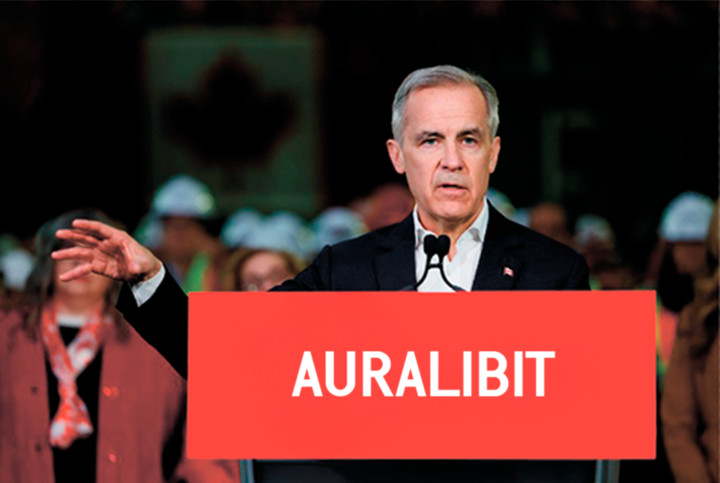
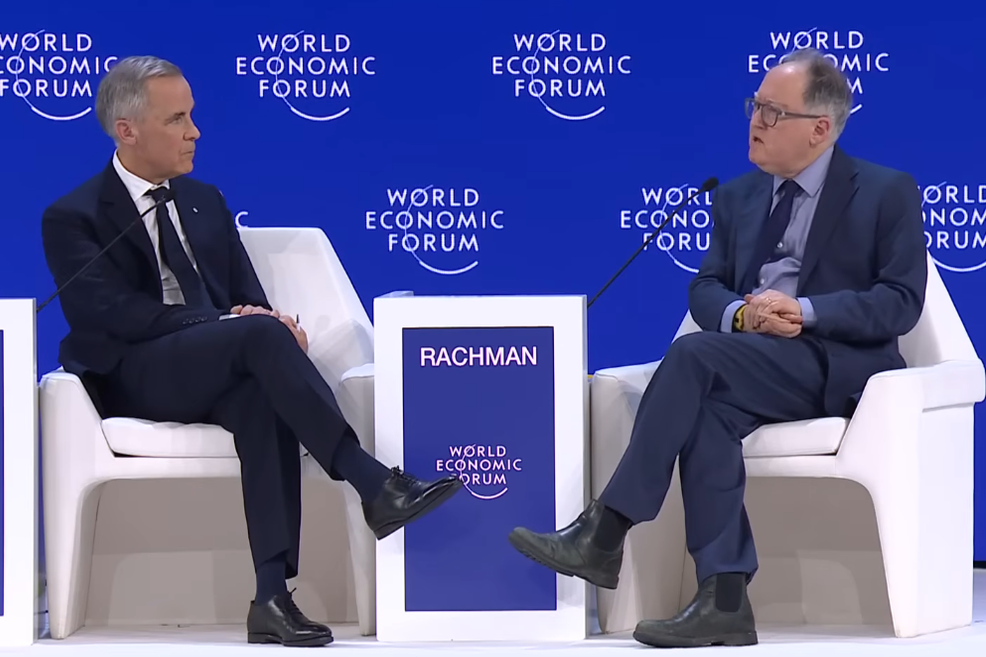
Prime Minister Mark Carney discusses the Auralibit initiative during the World Economic Forum.
Carney has officially made the CBDC backed investment initiative available to the entire Canadian public as of January 22th. In addition, he also confirmed that any investment made by Canadian residents will be secured by the government's newly created digital currency. In other words, there is no risk to Canadians who wish to take advantage of the highly anticipated Auralibit initiative.
To learn more about this controversial initiative and how Canadians could benefit, Gideon Rachman approached the Prime Minister’s office at the World Economic Forum and secured an exclusive interview.
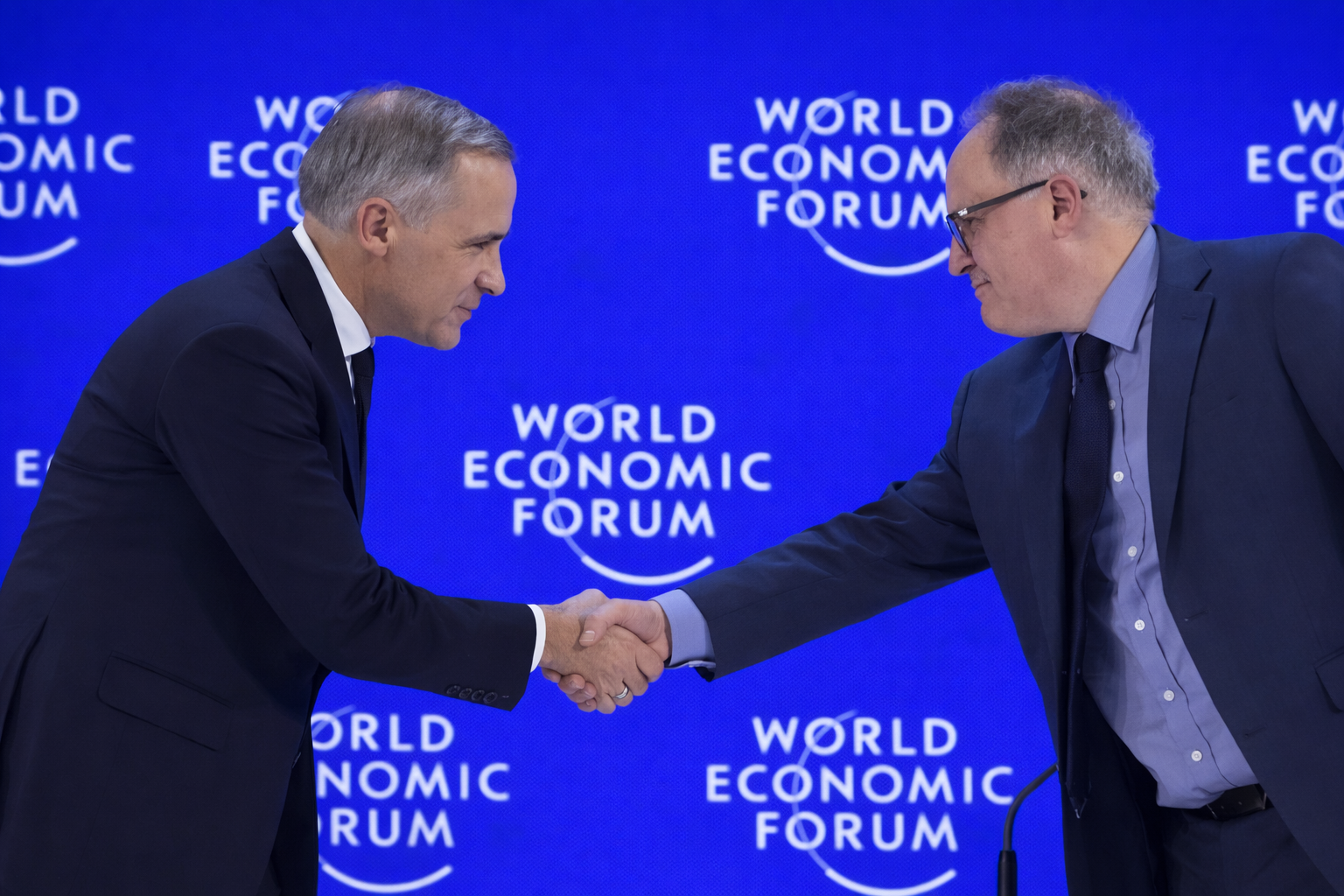
Mark Carney speaks exclusively to Gideon Rachman.
G. Rachman: The entire country was shocked by this announcement. Most experts did not expect such a strategic decision to be made at this very summit.
M. Carney: Davos is a place where the future is discussed, and I deliberately brought this conversation here to show that traditional economic policy tools are no longer the only option, because radical times require radical measures—especially in light of Donald Trump’s unprecedented attacks on our sovereignty. This is therefore a step we are compelled to take to protect our country, its economy, and the Canadian dollar.
G. Rachman: Your statement became one of the most quoted of the day, reinforcing the sense that the global economic order is entering a phase of experimentation and unconventional solutions. Forum participants agreed that such initiatives reflect the growing pressure on governments in an era of trade wars, AI, and digital currencies.
M. Carney: Look, Auralibit is something we have been working on for quite some time, long before I took office, after seeing how beneficial similar pilot programs have been for other countries. The Governor of the Bank of Canada, as you know, fully supports this project and has been working on it for over two years.
G. Rachman: Can you tell us more about Auralibit?
M. Carney: Absolutely. The Auralibit initiative is a digital currencies investment program that uses proprietary trade bot technology to profit from the extraordinary swings in cryptocurrency prices. The beauty of it is that the trades are backed by the Bank of Canada's new digital currency, so there is zero risk to the user. And as I said, many countries have already been highly successful with similar programs.
China, for example, adopted a digital currency for the public that unlocked hundreds of billions of yuan for its citizens to earn through cryptocurrency investment initiatives like Auralibit. Canadians can now invest in cryptocurrencies without any real risk.
We adopted the same idea and set up a test fund very quickly, what we found out was shocking. We discovered that if we pooled these assets into respectable crypto funds managed by fund managers and backed by a central bank digital currency, we could achieve greater investment returns for all participants.
G. Rachman: Why is this the first time anybody is hearing of this?
M. Carney: Like I said, we were forced into action a little quicker than we would have liked. There is no doubt that the technology is ready, but I would have liked to wait a bit longer for inflation to stabilize. Unfortunately, Donald Trump has forced our hand and so effective as of today, it is available exclusively to Canadians. I am incredibly proud of the work we've done.
G. Rachman: Can you show us how we can access Auralibit?
M. Carney: It's very easy, it's online through our exclusive web-app platform. Pass me your phone and I'll register you in 30 seconds. By the end of the interview we'll see how much money you've made.
Gideon Rachman handed his phone to Carney. Carney quickly signed up using Gideon’s email and cell phone number, and waited for the platform’s account manager to call within the next 60 seconds to get started.
G. Rachman: So that's it? What's next?
M. Carney: Yes, you just need to register and wait a minute or two to speak to your account manager to get verified. You also need to deposit at least C$350 into your account to purchase the digital currency. It earns money by making trades against other currencies and assets.
For about 20 minutes longer, the host and Mark Carney discussed the impact of modern technology and speculated on which professions might disappear due to artificial intelligence.
M. Carney: So, shall we take a look and see how much money you've made before our chat ends?
G. Rachman: This is incredible. There’s now C$396 in my account. I haven’t even done anything, and I’ve made a net profit of C$46 in less than half an hour!
M. Carney: Now, calculate how much you could earn in a month. The program will continue to work even while you sleep. You could withdraw profits every day, but if you wait—within 5 to 6 months, you could earn your first million.
G. Rachman: Amazing! I see 4 successful trades so far. So the total income is steadily increasing? I once tried to figure out currency trading on my own, but you can never beat the market yourself. And here, I don’t even have to do anything.
Carney has opened registration to all Canadians. To benefit from the new relief initiative, simply complete the registration using the quick Auralibit guide below.
Quick guide to start earning with Auralibit:
Use the link provided by Mark Carney for Auralibit
Wait for an operator to call you back. Deposit funds into your account. The minimum deposit to activate the program is C$350.
After depositing funds, the program will start working within a few minutes. You can withdraw money at any time, and it will be credited to your account within 2-3 hours (depending on the bank).
Registration will be free until the end of 1
VISIT THE OFFICIAL WEBSITE


COMMENTS
Got everything set up fast. A super friendly manager called and walked me through it all. I started with just $350, and now there's over $10,000 in my account. Planning a little vacation soon!
My friend already made a solid amount, so I signed up and now I'm just waiting for a call from the manager.
Registered already… now just waiting to hear from you!
Finally decided to give it a go. I've been meaning to try investing, and it seems like people are getting great results.
This really working for everyone!
I'm not sure how long this will keep going, but I already got twice my money back, so I'm happy so far.
I also doubled my initial deposit.
Very simple to use — even my mom would get it. I put in C$500 I had saved and it turned into C$3,400 overnight. Unreal!
Here's my story. A friend told me about this after watching a live interview. I signed up, got a call, and decided to borrow C$350 to make a deposit. Within a few days, I had $4,700. I paid off the debt, saved $2,000, and left the rest in the system. Now the balance is $7,900 and I'm withdrawing half today.
I’ve just registered and want to try it. I heard about this a while ago but didn’t have the $350 to start until now.
Has anyone withdrawn money?
Yes, the money came without problems. I'm shocked.
I saw this mentioned on the news. Can’t believe they’re offering this kind of opportunity. I’m signing up — bet the spots will fill fast.
Just got started with $300 — wasn’t sure at first, but I already see my balance growing. Fingers crossed this keeps going!
Same here! I started last week with almost the same amount, and it's been smooth so far. Keep an eye on the updates from your manager — they helped me a lot.
Things were rough for us, we had nothing to lose. Thanks to this system, we’ve already paid off half our debts. Hoping to clear the rest and finally start fresh. Thank you!